01 / 03
Stay
Being prepared to remain safely at home during disruption such as power loss, water interruption, severe weather or temporary isolation.
When power, water or networks are disrupted, the first three days are when households most need to look after themselves. Home Emergency 72 is a calm, practical way to make sure yours can.
Start with what you have
The aim isn't to buy more for the sake of it. It's to understand what you already have, find the gaps that genuinely matter, and use prepared packages only where they offer a practical solution.
The journey
Understand what your household already has and identify the preparedness gaps that matter.
Decide which areas matter most: staying safely at home, leaving quickly, or keeping power and communication.
Select a prepared Home Emergency 72 package designed around a group of related needs.
Add what's particular to your household, such as medication, food preferences, clothing, documents and more.
Three preparedness principles
Being prepared to remain safely at home during disruption such as power loss, water interruption, severe weather or temporary isolation.
Being ready to leave at short notice, with essential items organised and portable.
Maintaining access to power, information and communication when normal systems are disrupted.
Organised, not improvised
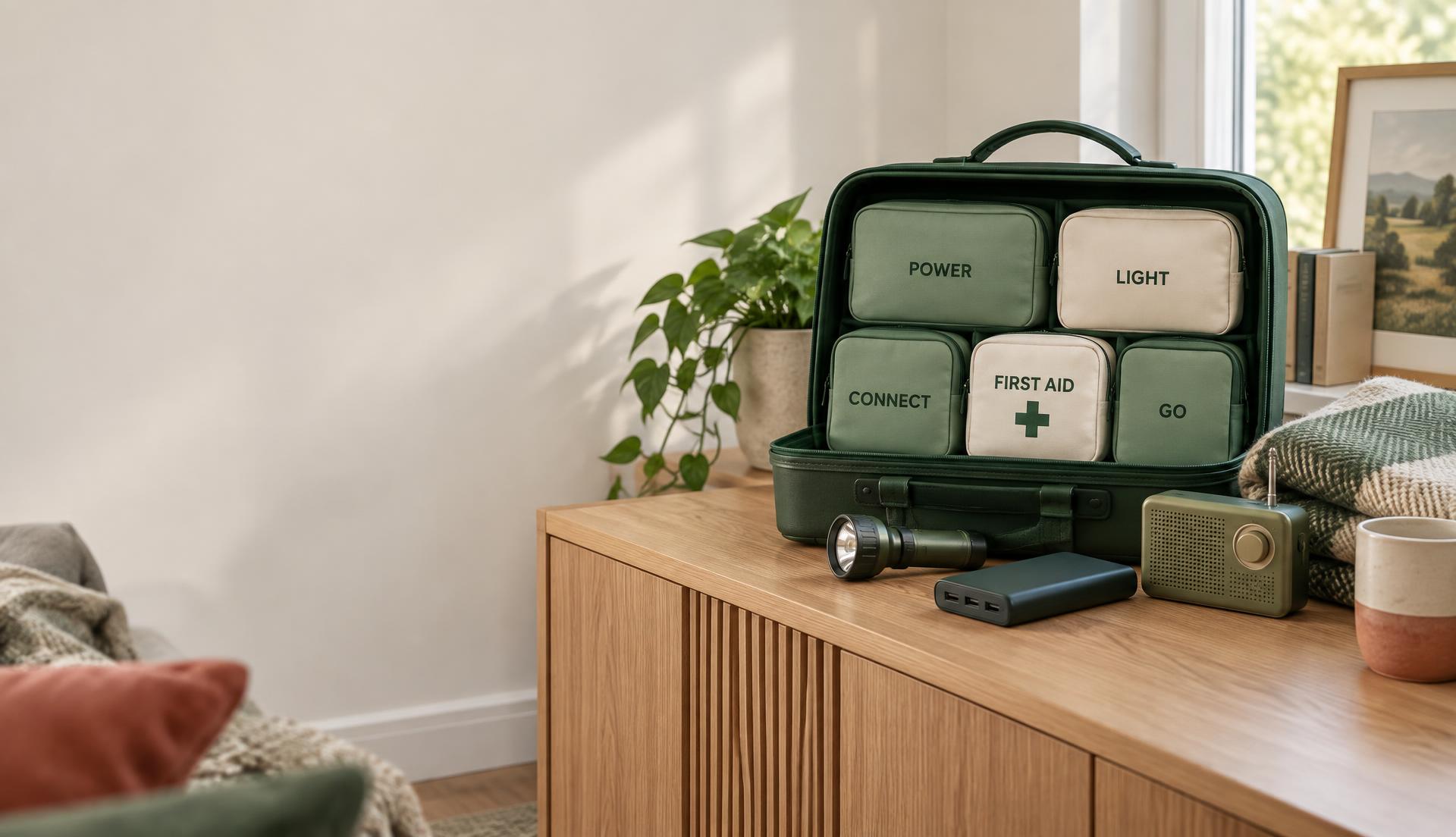
Home Emergency 72 packages bring together complementary items around a specific preparedness need. They are designed to reduce the time and uncertainty involved in researching, sourcing and assembling everything individually.
The range is being developed around these principles, and will grow over time. Some needs are best met by what you already own or by items particular to your household.
Credibility
Three days is a widely used benchmark in household emergency preparedness. UK government preparedness guidance encourages households to consider the supplies they may need during an emergency lasting a few days, while emergency organisations internationally also use 72 hours as a practical planning period.
Home Emergency 72 takes that principle and turns it into a simple household readiness approach: understand the risks, organise the essentials and be ready to manage short-term disruption.
Sources: UK Government Prepare guidance and household preparedness research; American Red Cross emergency preparedness guidance.
Home Emergency 72 is not based on extreme scenarios. The approach reflects common emergency-preparedness guidance around maintaining access to water, food, lighting, communications, first aid, power and essential personal items during short-term disruption.
Understand your gaps first, then choose the package most relevant to your household.